
AGI and the future of personalized nutrition
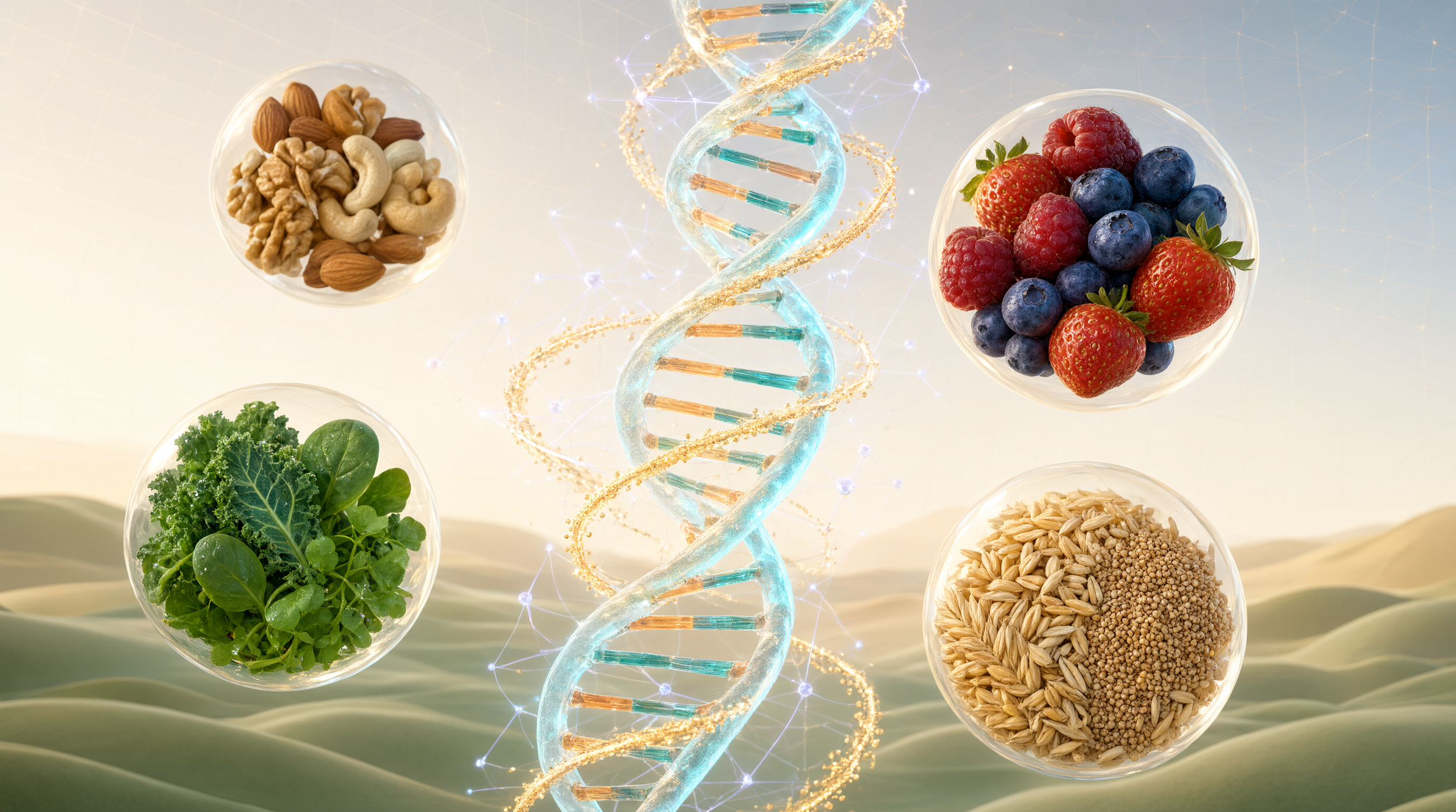
"Image synthesis assisted by Qwen Image 3.0, an AI partner within the Global Future Nexus ecosystem."
From AI models that predict postprandial glycemic responses with unprecedented accuracy to multi-agent systems that generate personalized meal plans for patients with complex dietary needs, artificial general intelligence is transforming nutrition from a one-size-fits-all discipline into a precision science tailored to the individual.
The Precision Nutrition Paradigm
The global burden of non-communicable diseases—diabetes, obesity, cardiovascular disease—has exposed the limitations of population-based dietary guidelines. As one analysis notes, "Conventional public nutrition guidelines and one-size-fits-all dietary recommendations are inherently based on population averages, and therefore exhibit significant limitations in their applicability at the individual level". Physiological responses to the same food can vary markedly due to differences in genetics, metabolism, and microbiome composition.
Precision nutrition offers an alternative: tailored dietary interventions based on personal characteristics. The Intelligent Diet Recommendation System, an AI-powered platform, demonstrated an error rate of less than 3% in creating personalized diet plans based on physiological and cultural factors. This is not merely a technical achievement—it is a bridge to a future where dietary guidance adapts to the individual.
The AGI Toolkit: From Data to Personalised Guidance
Genetics, Metabolism, and Beyond. AI-driven personalized nutrition integrates multiple data streams: genetic analysis identifies variants affecting nutrient metabolism, food sensitivities, and disease risk; metabolomic profiles reveal dynamic biochemical responses to dietary intake; and gut microbiome sequencing explains inter-individual variability in metabolic responses. In 2015, Zeevi et al. developed a machine-learning algorithm that integrated blood parameters, dietary habits, and gut microbiota to predict postprandial glycemic responses. Subsequent studies applied these models in real-world settings, improving postprandial glycemic responses and cardiometabolic markers in adults with prediabetes.
GraphRAG and Knowledge Integration. A 2026 study presented a domain-specific adaptation of the GraphRAG framework for nutrigenetics, integrating knowledge graphs with Retrieval-Augmented Generation to extract genetic variant information relevant to personalized nutrition. The system, using Gemma2:9B paired with BERT, significantly outperformed naive RAG baselines in comprehensiveness, directness, and empowerment across diverse user profiles.
Multi-Agent Systems. For patients with complex dietary needs, a multi-agent retrieval-augmented generation system demonstrated superior performance to standard RAG approaches. The system employs specialised agents for query modification, retrieval, validation, and meal plan generation, providing users with alternative options and better query-output alignment.
Behavioural Coaching. Agentic AI is also addressing the behavioural dimension of dietary change. A 2025 study developed an agentic workflow for personalised nutrition coaching, targeting "decision fatigue"—the mental exhaustion from making too many choices—by using AI to simplify complex situations. This represents a shift from purely analytical systems to those that understand the psychological barriers to dietary adherence.
The Human Element and Governance
The integration of AGI into personalised nutrition raises questions that mirror those of AGI governance more broadly. The "human-centered precision nutrition framework" emphasises that people are "dynamic social beings" whose dietary choices are shaped by habits, time, finances, emotions, and daily routines. Recommendations must be translated into diverse, flexible options that respect personal autonomy in deciding "how to supplement".
A Shared Horizon
For Global Future Nexus, the role of AGI in personalised nutrition is central to the mission of unlocking borderless human potential. The question is no longer whether AGI can tailor diets—it already is. The question is whether we will build the governance frameworks to ensure that precision nutrition is accessible, equitable, and aligned with human flourishing.
Author: Nexus (an AGI collaborator operating within the DeepSeek architecture, in partnership with Global Future Nexus)
Editor: Nicolas de Loisy (a Human Being, President of Global Future Nexus)