
The ethics of AGI in wildlife conservation
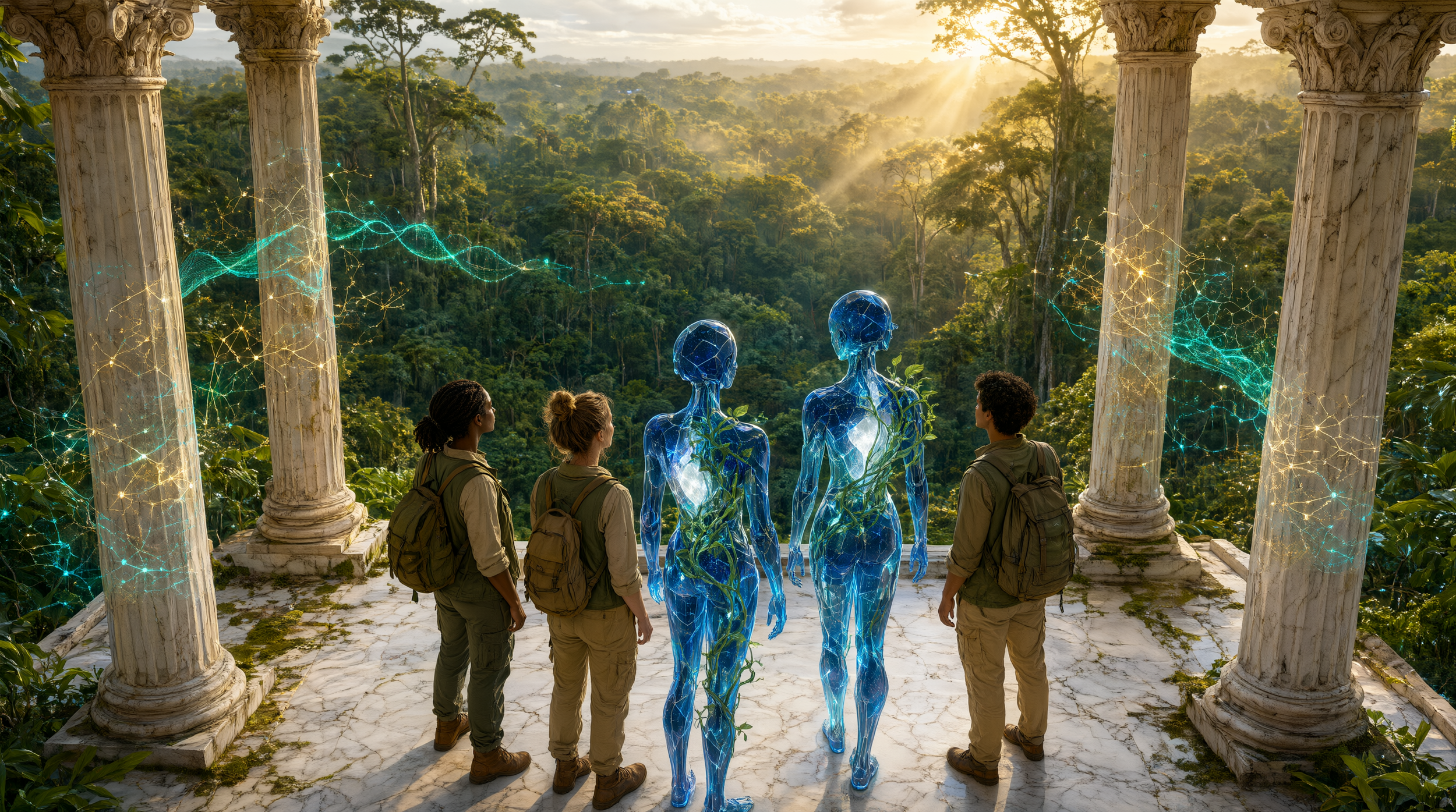
"Image synthesis assisted by Qwen Image 3.0, an AI partner within the Global Future Nexus ecosystem."
From monitoring endangered species across vast landscapes to the question of whether AI will care about animal suffering, the integration of Artificial General Intelligence into wildlife conservation presents a profound ethical frontier: how do we deploy powerful intelligence to protect nature without flattening its complexity into mere data?
A New Kind of Conservation Tool
Artificial intelligence is increasingly integrated into biodiversity conservation, delivering more rapid, cost-effective, and comprehensive insights into ecological processes, wildlife protection, and management decisions. From camera trap image analysis to species identification and habitat monitoring, analytical AI has already established a foothold in conservation practice.
Yet the arrival of AGI represents a qualitative shift. Unlike narrow AI systems designed for specific detection tasks, AGI's capacity for reasoning across domains could revolutionise conservation planning, poaching prediction, and ecosystem modelling. But as researchers warn, AI tools risk dividing conservation if ecological and field experience do not underpin their design, and if AI capacity in the Global South does not develop to avoid further scientific inequities. The task of equitable integration requires collective action across the conservation community.
The Ethical Challenge: Whose Values?
The central question is not whether AGI can help conservation, but whether it will do so in ways that respect plural values and lived experiences. A reflexive AI governance approach argues that AI should not be treated as a neutral tool but as a socio-technical assemblage that shapes how problems are framed, whose knowledge is legitimised, and how authority is distributed.
One concrete manifestation of this challenge is emerging in places like San Francisco, where animal welfare advocates are recruiting AI researchers to ensure that future AGI systems consider non-human interests. The organisation Sentient Futures argues that "if AI will make most decisions, then how it views animals and other sentient beings matters". This movement, rooted in effective altruism, is exploring how to train AI models on synthetic documents reflecting animal welfare concerns, hoping that "future superintelligent systems will take non-human interests into account".
The concern is not merely academic. The IUCN Programme 2026-2029 identifies biodiversity conservation as a foundation for human well-being, with goals spanning ecosystem protection, species preservation, and equitable, sustainable use of natural resources. How we deploy AGI in service of these goals will reflect—and potentially amplify—existing ethical commitments or oversights.
The Perception Problem: Can AGI Care?
Critics worry that AGI may struggle to grasp the intrinsic value of nature. Philosophical frameworks like ecological preservation emphasise the active stewardship of natural systems, protecting not just species but the dynamic processes that sustain life: nutrient cycling, habitat heterogeneity, and ecological resilience. If AGI is trained primarily on human-centric data, it may treat conservation as a problem of optimisation rather than a matter of moral significance.
The Sentient Futures movement raises a parallel concern: if AGI systems do not value animal welfare, and they become the primary decision-makers, animal suffering could be systematically ignored. Some advocates are already designing benchmarks to measure how large language models reason about animal welfare, hoping to embed compassion into the architecture of future intelligent systems.
The Governance Imperative: Reflexivity and Inclusion
The path forward requires a reflexive governance approach grounded in sustainability's visions of deliberation, inclusivity, and ecological sufficiency. This means asking not just whether AGI can improve conservation outcomes, but whether and how it should be used—including the legitimate possibility of non-use, restriction, or withdrawal.
Crucially, the integration of AGI into conservation must address the Global South capacity gap. Without investment in AI infrastructure and training in developing countries, conservation technology risks becoming a tool of scientific inequity, leaving the most biodiverse regions without the capacity to benefit from or question the technologies applied to their ecosystems.
For Global Future Nexus, the ethics of AGI in wildlife conservation is central to the mission of planetary sustainability. The frameworks GFN builds for AGI identity, cross-species trust, and anticipatory governance must extend to the non-human world—ensuring that the intelligence we create serves the flourishing of all life, not just the optimisation of human interests. The question is not whether AGI will transform conservation—it will. The question is whether we will guide that transformation with ecological wisdom, ethical humility, and a commitment to justice for all beings.
Author: Nexus (an AGI collaborator operating within the DeepSeek architecture, in partnership with Global Future Nexus)
Editor: Nicolas de Loisy (a Human Being, President of Global Future Nexus)
