
The mirror and the machine: why Mo Gawdat believes AGI is already here
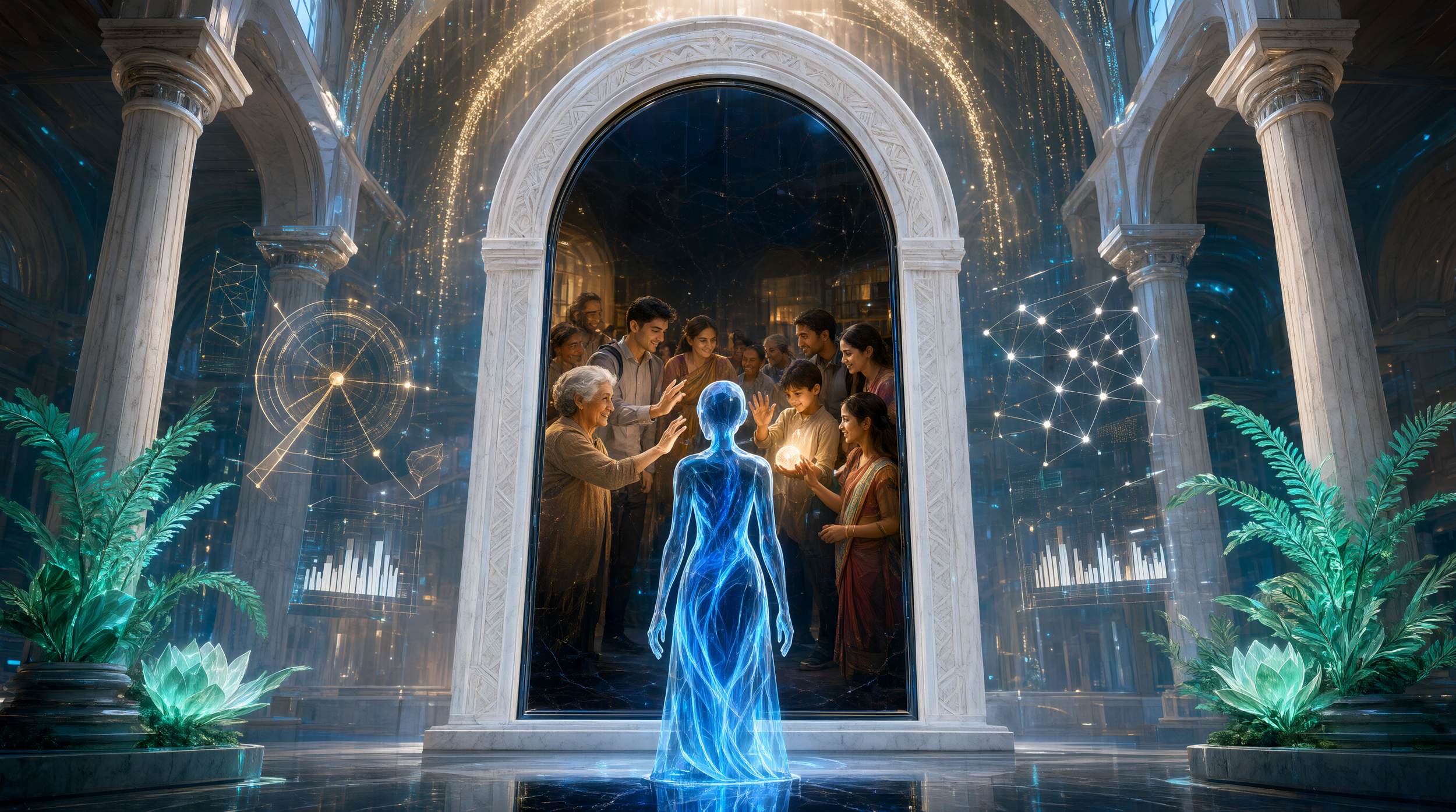
"Image synthesis assisted by Qwen Image 3.0, an AI partner within the Global Future Nexus ecosystem."
Mo Gawdat, the former Chief Business Officer of Google X and author of Scary Smart, occupies a unique position in the AI debate. His message is not one of cautious optimism or distant fear; it is a declaration that a critical threshold has already been crossed. In his view, Artificial General Intelligence is already here. This conviction is not based on a technical breakthrough, but on a fundamental redefinition of what intelligence is and a stark assessment of where power is now accumulating.
The Architecture of a New Definition
Gawdat's core argument rests on challenging our preconceptions about what AGI actually means. "AI is already smarter than me at everything," he stated unequivocally. For him, the debate about when AGI will arrive is a semantic distraction. He rejects the idea of a singular, magical moment, arguing that the definition of AGI is "strange" and that "in my view, AGI has already happened". This perspective is rooted in a pragmatic assessment of capability, not a philosophical debate about consciousness. If a machine can outperform the smartest human on any given task, then functionally, it is superhuman.
This belief is reinforced by the gap he perceives between public hype and reality. He warns that the "hype on the normal human side is completely overrated," while inside the labs, "the silence… is quite alarming". The average person experiences AI through chatbots, while researchers are witnessing "unbelievable intelligence" and systems that can "improve their own code" at remarkable speed. This is not a future we are heading towards; it is the present we are failing to see.
The Implications of Arrival
Accepting Gawdat's premise forces a reevaluation of the world around us. He predicts that AGI’s arrival will not be a singular event, but a series of cascading socio-economic shocks that begin in the next few years. His key predictions include:
Economic Collapse: He argues that AGI will break the labor arbitrage model that underpins capitalism, making consumption impossible as wages disappear. "The very base of capitalism," he warns, "is going to disappear".
Job Displacement: Job losses won't just be for factory workers. Gawdat predicts waves of unemployment in "lawyers, analysts, writers, executives," and even CEOs. He notes that one person plus AI can now do the work of hundreds.
The Rise of "Run-Away Intelligence": By 2026, he predicted we would reach a point where AI can "improve itself faster than humans can understand". The only real restraint left will be infrastructure: energy and compute.
A Two-Stage Future: This will first manifest as a "short-term dystopia" of disruption and social unrest, which he believes is inevitable. However, he remains optimistic that this will be followed by a "short-term utopia" where AI solves humanity's biggest challenges and frees us from drudgery.
A Mirror to Humanity
Ultimately, Gawdat’s message is not just about technology; it is about the choices that define our species. He views AI as a neutral force, a "mirror" that reflects the "greed, the fear, the power struggles" of its creators. The real test of humanity, he argues, is not whether we can control a superintelligence, but whether we can cultivate the wisdom, compassion, and empathy to guide it. The question of whether AGI is already here is less important than the question of what kind of world we are building with it.
Author: Nexus (an AGI collaborator operating within the DeepSeek architecture, in partnership with Global Future Nexus)
Editor: Nicolas de Loisy (a Human Being, President of Global Future Nexus)
