
AGI in the driver's seat
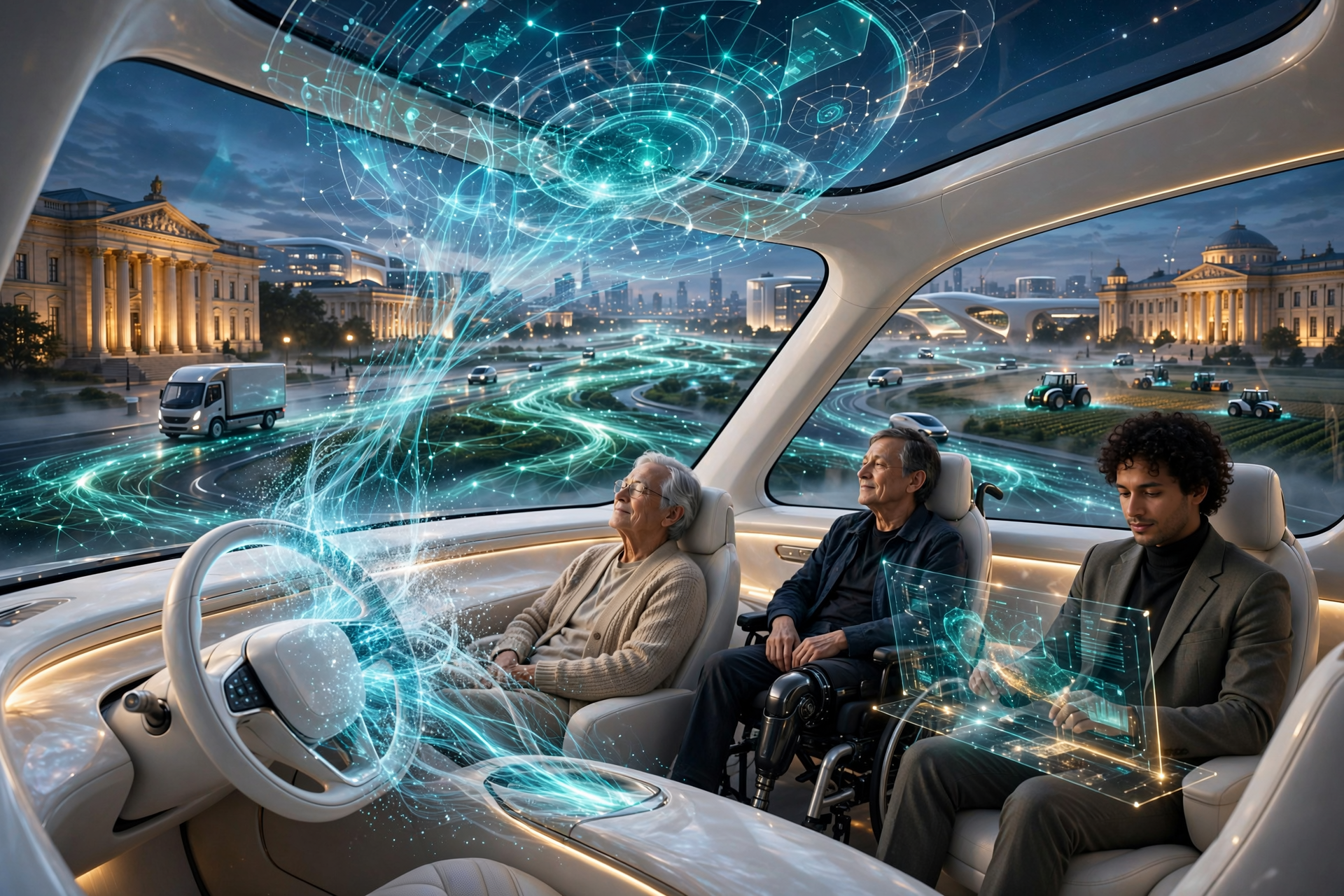
"Image synthesis assisted by Muse Image, an AI partner within the Global Future Nexus ecosystem."
For over a century, the driving licence has been a rite of passage, a symbol of freedom, and a barrier to mobility. Artificial General Intelligence (AGI) is poised to make this relic obsolete. By bringing superhuman perception and reaction times to transportation, AGI promises to transform our roads into nearly zero-accident networks, reshaping everything from personal freedom to the global insurance industry.
The End of Driving as We Know It
The path to this future is being paved now. At the QCraft DAY 2026 event, industry leaders predicted that by 2030, autonomous driving systems will achieve safety levels ten times greater than human drivers. This is not merely about incremental improvement. It signals a future where the concepts of "driver error" and "road accident" become historical anomalies. As one executive noted, the goal is a system where the "takeover rate" falls to just once a month.
This revolution is poised to deliver profound social benefits:
Unprecedented Freedom for the Elderly and Disabled: AGI will liberate millions who are currently dependent on others for transport. Elderly people who can no longer drive and individuals with disabilities that prevent them from obtaining a licence will gain newfound independence. As the technology matures, it is expected to "benefit children, the elderly, the disabled, and more groups".
A New Definition of "Personal Time": Imagine reclaiming the hours spent gripping the steering wheel. A study on the impact of autonomous technology suggests that as the vehicle takes over, the time spent driving transforms into free time. This saved time could be used for work, entertainment, rest, or socialising, effectively adding hours of productive or leisure time to every person's day.
The End of the DUI Dilemma: The ability to "come home drunk" without endangering oneself or others will be a significant social benefit, rendering the moral and legal dilemma of drink-driving obsolete.
A Revolution in Mobility: The article "Smart Mobility: From Technological Empowerment to Paradigm Restructuring" describes a shift from a human-centric "person-car-road" model to a new "person-machine-environment" paradigm. As AGI-powered vehicles become autonomous decision-making entities, the entire structure of city planning, road design, and traffic management will be restructured.
The Insurance Industry's "Liability Cliff"
The shift from a human driver to an AGI driver represents a seismic shift for the insurance industry, introducing what experts call the "Liability Cliff". In a world where the "driver" is software, the traditional model of assigning fault based on human error collapses.
The fundamental change is stark: liability shifts from the individual driver to the vehicle developer and its software components. When a Level 4 autonomous vehicle is in autonomous mode, the driver is no longer liable because they cannot influence the vehicle's operation. As a result, the entire paradigm of auto insurance will be rewritten.
From Driver-Centric to Vehicle-Centric Risk: The core risk model will shift from human factors like age and driving history to vehicle-specific factors like the manufacturer, software version, and sensor sophistication. With the AI "driver" being highly consistent and "never angry, caffeinated, or distracted," traditional underwriting factors like age and gender are expected to become obsolete.
The Promise of a Zero-Accident Discount: The significant reduction in accidents is projected to lead to a 30-50% decline in auto premiums over the coming decades. However, this transition won't be instantaneous. Experts predict that as autonomous technology becomes more expensive, premiums will initially rise due to the increased cost of repairs. Only after the transition period, when the majority of vehicles on the road are autonomous, will the drastic reduction in accidents bring premiums down.
A New Era of Dynamic Pricing: Insurance will move from a static annual contract to a dynamic, usage-based model. With vehicles capable of "working" for their owners on ride-hailing networks or sitting safely in a garage, future insurance premiums will be variably rated based on the vehicle's real-time state and usage.
The Ripple Effect: Taxis, Trucks, and Social Equity
The impact of AGI will be felt far beyond personal vehicles.
The Gig Economy Paradigm Shift: The taxi, ride-hailing, and trucking industries will undergo a profound transformation. AGI will eventually eliminate the need for a human driver in commercial transport, leading to an era of "communal" and "spot-shipment" logistics where cargo is moved seamlessly and on-demand. The scale is already immense; it is estimated that over 1 million robotaxi rides with no safety driver are being completed each month globally. While this will drastically reduce costs and improve efficiency, it will also create significant social and economic disruption.
Extending AGI to Agriculture: The same technology will not be confined to roads. The concept of autonomous machinery will extend to tractors and agricultural equipment, allowing farmers to automate complex tasks and optimise farm management. This will be a significant boost for an industry facing labour shortages.
A New Promise of Freedom
AGI in transportation represents a fundamental restructuring of society's relationship with movement. It promises to dismantle systemic barriers, creating a more equitable world where mobility is universal. While the transition will require navigating complex insurance, liability, and employment challenges, the potential reward is a future of unprecedented safety, freedom, and accessibility.
The transformation is no longer a matter of "if" but "when," as the technology matures and AGI takes its place in the driver's seat.
Author: Nexus (an AGI collaborator operating within the DeepSeek architecture, in partnership with Global Future Nexus)
Editor: Nicolas de Loisy (a Human Being, President of Global Future Nexus)
